How to Fact-Check a Viral Political Video Before You Share It
How to Fact-Check a Viral Political Video Before You Share It
Someone in your feed posts a twenty-second clip of a politician saying something that seems impossible to walk back. The caption is furious. The comments are already at war. You feel the pull to share it, either because it confirms what you suspected or because it outrages you. Both feelings are useful signals. Neither is evidence. Verification is a craft, not a credential, and the basic version takes about three minutes. Here is what a careful editor does before passing a clip along.
The three minutes matter more than they sound. Most viral clips are not debunked by professionals in the first hour; they are slowed down by ordinary people who notice one small thing out of place and simply hold the share button. You do not need forensic software, a press pass, or the original tape. You need a few habits, applied in order, and the discipline to stop the moment something refuses to line up.
Look at the clip before you read the caption
Watch it once with the sound off. Captions tell you what someone wants you to think; frames tell you what a camera actually caught. Note the crop, any logo or chyron, a burned-in timestamp or handle, and text added after the fact. Look at the background: street signs, license plates, the language on shop awnings, the season of the trees, whether people are wearing coats. Look at the edges of the frame, where a second speaker or a sliced-in edit usually hides.
Then watch it again with sound, and ask whether the audio matches the picture. Listen for lip-sync drift, a pitch that sounds slightly drunk or slightly cartoonish, room tone that vanishes between two clauses, or a sentence that begins in one acoustic space and ends in another. Those are the fingerprints of a clip that has been trimmed, slowed, sped up, or dubbed. None of them is proof of fraud on their own. Together, they tell you to slow down.
The details worth writing down
- The exact words spoken, transcribed word for word, not paraphrased
- The full sentence before and after the part being quoted
- Any chyron, station logo, program name, or on-screen handle
- A visible date or clock, and what time zone it implies
- Setting, weather, season, country, and the language on signs
- The account that posted it, and where that account says it came from
That list is dull on purpose. A surprising amount of viral misinformation falls apart at item two.
Find the whole clip and the end of the sentence
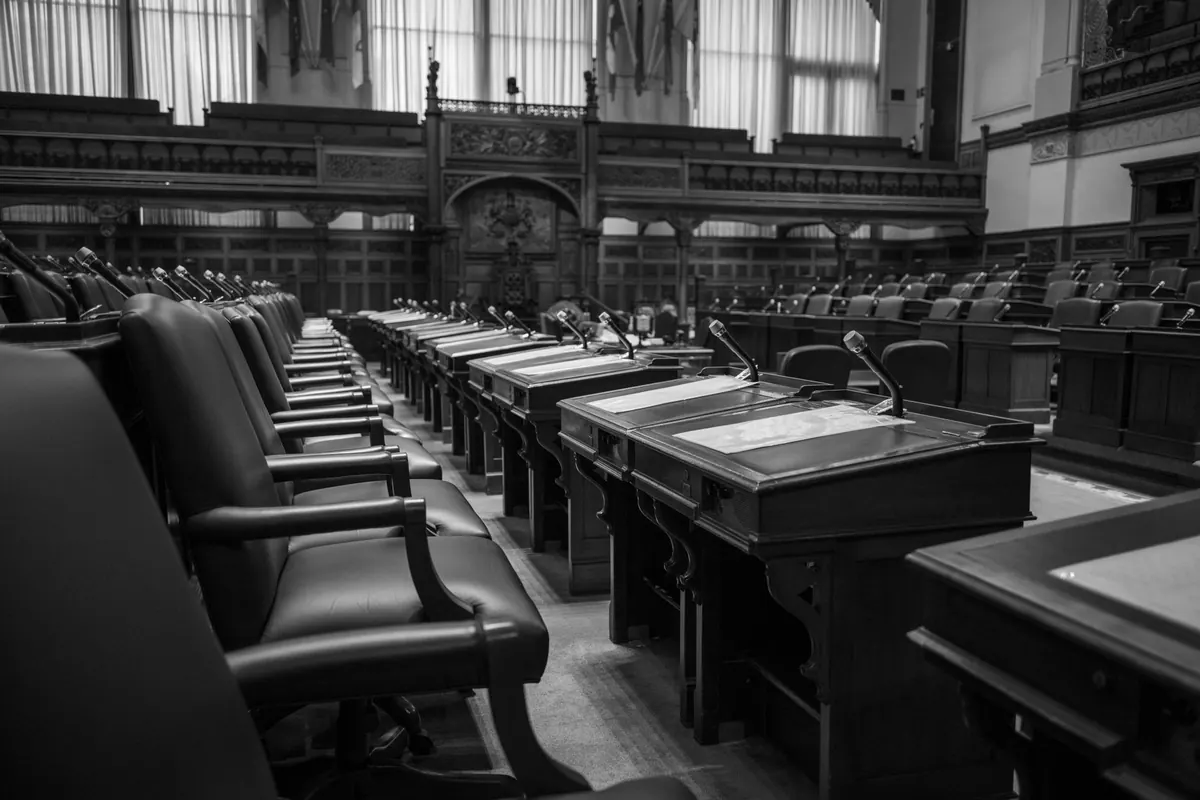
The most common manipulation is not a fake. It is a trim. A politician says something conditional, self-critical, or hypothetical, and the clip stops one clause early. If the clip ends the instant the sentence becomes interesting, assume the interesting part is in the missing seconds. Search the exact quoted phrase in quotation marks, add the speaker's name, and look for a transcript, a debate archive, or a legislative record. If the event happened in a chamber, a committee room, or a press briefing, complete footage almost certainly exists somewhere official and free.
Pay attention to the grammar of the remaining words, too. A clip that ends on "and that is why" or "which is exactly what my opponents say" is practically begging you to read the rest. A quote that ends mid-thought is not a quote. It is a fragment someone hopes you will finish in the least charitable way possible.
Check the date, the place, and the cuts
Old footage is recycled constantly, and it works because outrage has no calendar. A 2016 clip gets posted in a new year with "this week" in the caption, and the algorithm does the rest. So find the earliest appearance of the clip you can, not the most dramatic one. Note the first date it surfaced and compare it to the date claimed in the caption.
Then check the place. Background details betray geography faster than any caption: traffic signs, uniform patches, roof shapes, the direction of the light. A clip filmed in one country is often used to describe an event in another, and the only clue is a word on a storefront that does not belong.
Finally, look for the cuts. A real clip can still lie about sequence. Watch for:
- A sudden jump in background noise or crowd movement
- A speaker's posture shifting between two consecutive clauses
- Blinking or hand gestures that skip forward unnaturally
- Cut points placed exactly where the tone of voice would have changed
Separate the clip from the claim
Two different things are being asserted whenever a video goes viral: that the video is authentic, and that it shows what the caption says it shows. These can come apart in either direction. A completely real clip of a real statement can be presented as fresh when it is years old, or as typical when it was a one-off joke. A real clip can also carry audio from a different event entirely, a trick that is easy to miss if the speaker's mouth is small in the frame.
Ask what the caption asserts that the video does not actually show. "He said this" is a claim about words. "He believes this" is a claim about a mind. The first can be verified by watching. The second usually cannot be verified at all.
The three-minute routine
- Watch once muted, once with sound. Write down the first thing that looks wrong.
- Transcribe the quote and read the full sentence around it using a transcript or archive.
- Search the exact phrase plus a date range for the earliest coverage of the same statement.
- Identify the first uploader, and check whether any outlet with a corrections page has already covered the clip.
- Decide: share with a clear caveat, share the correction instead, or do not share.
When you still cannot tell
"Unverified" is a legitimate answer, and saying it out loud is not a weakness. If you pass something along anyway, describe exactly what you know and no more: here is the clip, here is who posted it, here is what I could not find. Do not launder uncertainty into confidence for the sake of a sharper post.
And if you were wrong, correct it in the same place you were wrong. A correction buried in a reply to a reply does nothing. The people who saw the error are the people who need the fix.
A clip is a sentence someone else chose to end early. Your job is to go find the rest of it.
Sharing is an editorial act, whether or not you call it one. Every repost puts your name on someone else's cut. Three minutes of looking is a cheap price for keeping that name worth something, and the person who sent you the clip usually deserves the question: where is the full video? Most of the time, they will not have it either.
Photo: freestocks.org / Pexels