Opinion: The Local News Story Worth More Than the National Outrage Cycle
A city council votes 5-2 to rezone a stretch of road for apartments. A school board approves a calendar that moves winter break by a week. A county commission signs off on a contract for jail medical care. Each decision takes an hour and bends the shape of a few thousand lives. Then a senator says something provocative on a Sunday show, and every feed in the country pivots to that instead.
This is not a complaint about readers. It is a complaint about incentives. The national outrage cycle is loud, cheap to produce, and engineered to move on by Thursday. The council vote is quiet, tedious to cover, and still in force when your kid starts kindergarten in August.
The Outrage Cycle Is Built to Forget
The format rarely changes. A clip drops. Everyone reacts. Someone issues a statement. A boycott gets announced and quietly shelved. Nothing is passed, nothing is repealed, nobody's water bill moves. Two weeks later the same energy attaches to a different clip, from a different state, about a different fight.
Meanwhile, a school board vote on a reading curriculum sits in classrooms for a decade. A bond issue decides whether the middle school gets a new roof or another round of patching over the leaks. A vote on parking minimums decides whether the block near the bus stop becomes housing or stays a surface lot for another twenty years.
The asymmetry is worth naming. National politics is largely about identity and signaling — who is on whose team, who said the unforgivable thing. Local politics is about allocation. Who gets what, when, and who pays for it. One produces feelings. The other produces invoices.
The Decisions That Actually Reach Your Kitchen Table
If you want to know what a local government does all year, pull up a few agendas. You will find things like this:
- Property tax rates and what a reassessment does to your monthly payment
- Whether the fire station on your side of town stays staffed overnight
- Bus routes, crossing guards, and the hour your teenager waits at a dark stop
- Water and sewer rates, and who absorbs the cost of replacing old pipes
- Zoning: whether a duplex can go up next door, or a warehouse with idling trucks
- What your kids read, how often they are tested, and how suspensions are handled
- Library hours, park maintenance, and the noise ordinance nobody enforces
- Police and fire contracts, which set the tone of local public safety for years
None of those items trends. All of them land in your life long before the national argument resolves, if it ever does.
Why the Boring Beat Gets Abandoned
Local coverage thinned out when the business model under it collapsed. The paper that once had a full-time city hall reporter now has one general assignment reporter covering three towns, a school district, and Friday night football. Meetings start at six and run past nine. Agendas are posted as dense PDFs with attachments nobody opens.
There is a second problem, and it is subtler. Local news is often about process rather than conflict, and conflict is what gets clicks. A budget is not a fight unless someone makes it one — and frequently the real fight happened in a work session two weeks earlier, at 4 p.m., with no audience and no cameras.
When that coverage disappears, the gap does not stay empty. It fills with press releases, Facebook rumors, and the loudest person at the microphone. That is not just boring. That is expensive.
The vote is the easy story. The consequence arrives three months later, on your street, in your mailbox.
Four Questions That Turn a Meeting Into a Story
Whether you are writing for an audience of thousands or explaining the meeting to your neighbor over the fence, these four questions do most of the work:
- What changed? Not what was discussed. What was decided, and what is different tomorrow.
- Who asked for it, and who pays? Find the person or group behind the item and the money behind the money.
- Who showed up to object, and did anyone listen? Sometimes the answer is nobody. That is a story too.
- What happens next? A vote to "explore" something is not a decision. A vote to fund it is. The follow-up usually beats the meeting.
How to Cover a Two-Hour Meeting Without Losing Your Night
You do not need a newsroom to do this well. You need a calendar and a little discipline.
- Read the agenda at lunch. The consent agenda — items bundled for one vote — is where the money hides: contracts, easements, change orders, settlements.
- Stay for the votes, skip the speeches. Most meetings are streamed or archived. You can watch public comment later at double speed.
- Ask for the document. Staff reports, budget worksheets, and correspondence are public records in most places. Rules vary by state, so check your state's open meetings and open records law, or ask a librarian for help finding it.
- Write the follow-up. Three months later, check whether the thing you were promised actually happened.
Framing matters too. "Council approves 4 percent water rate increase" tells a reader more than "Council debates rate increase in heated session." One is useful. The other is noise wearing a headline.
Start With One Meeting
Pick a single body — the council, the school board, the planning commission, the library board. Put its next meeting on your calendar. Read the agenda the day before. If an item touches your street, your kid, or your bill, show up or send a written comment; many bodies read those into the record.
Subscribe to whatever local outlet still does the work, even if it is small, uneven, and run by two people who look tired. If there is no outlet at all, the minutes are posted somewhere, and someone in your neighborhood is already reading them. Find that person. Buy them coffee.
The outrage cycle will be there tomorrow, wearing a new coat and a new name. So will the pothole at the end of your street. Only one of them is waiting on you.
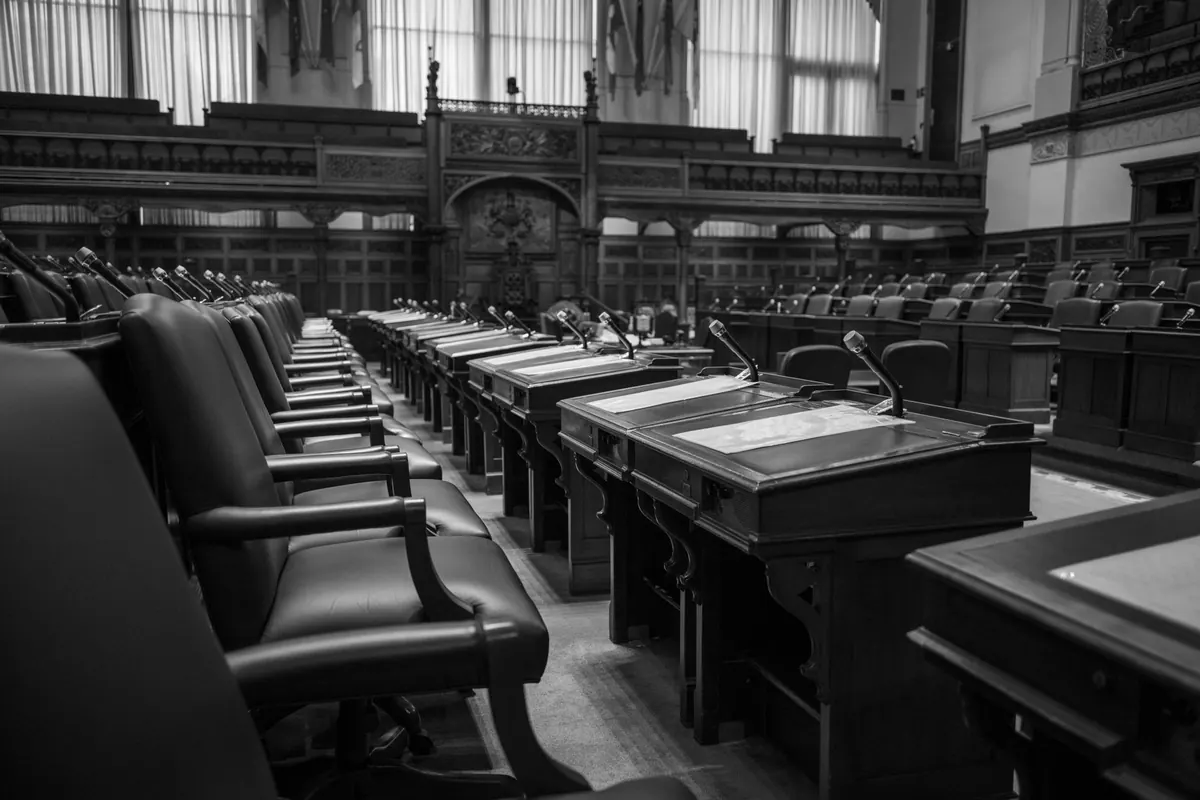
Photo: Héctor Berganza / Pexels