Why Red Sea Shipping Disruptions Raise Prices Everywhere: An Explainer
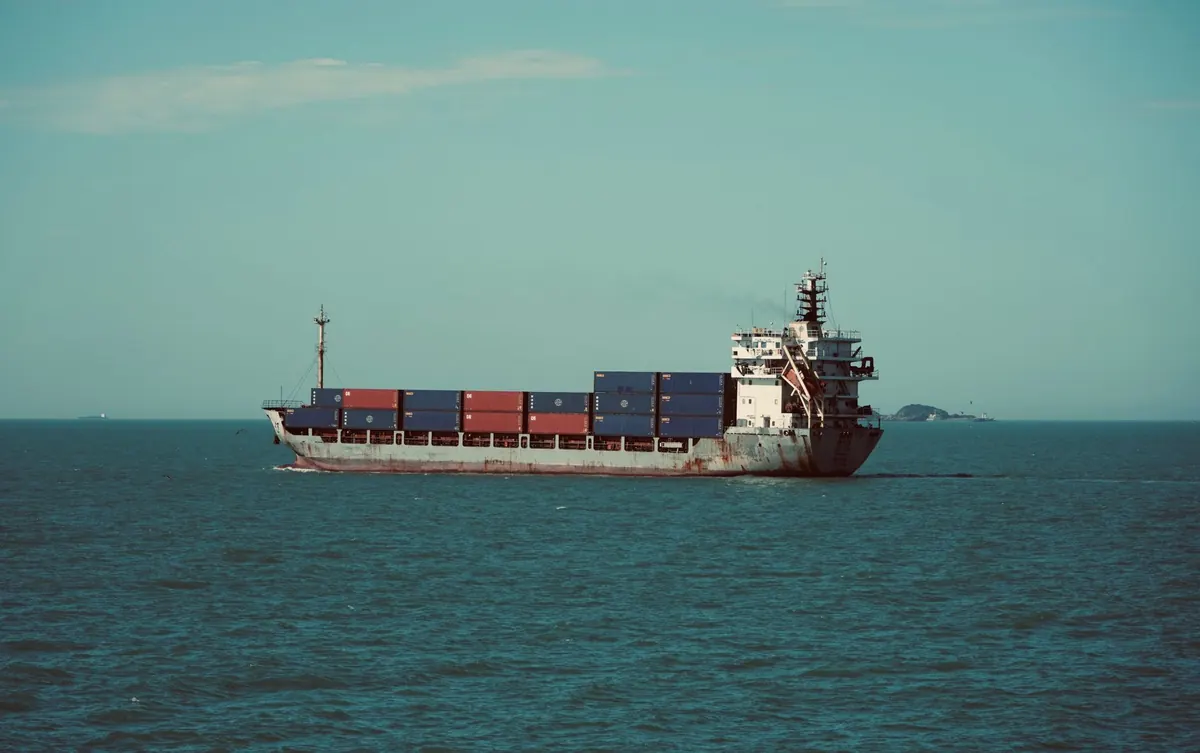
A container ship that once slipped through the Suez Canal in about a day now spends a week or more sailing around Africa instead. Nothing about that decision is free. Fuel, crew time, insurance, missed port calls — they all add up, and they don't stay on the water. The extra cost follows the cargo onto trucks, into warehouses, through distribution centres, and eventually onto a price tag in a shop. The distance between a missile launch near the Bab el-Mandeb strait and a higher price on flat-pack furniture in Leeds is shorter than it looks. The chain in between is worth understanding.
Where the bottleneck actually sits
The Red Sea corridor is the shortest sea link between Asia and Europe. Ships come up from the Indian Ocean, squeeze through the narrow Bab el-Mandeb strait, run north past Yemen and Sudan, and enter the Suez Canal. Take that route away and there is no comparable shortcut. The next option is the Cape of Good Hope — down the east coast of Africa, around the tip, and back up the Atlantic side.
When attacks on commercial vessels made the corridor dangerous, many carriers rerouted. Others kept going, sometimes escorted, sometimes not. The pattern has swung back and forth since: some services returned as risk eased, others pulled out again after fresh incidents. That inconsistency is its own problem. Shipping lines plan schedules months ahead, and a route that might be open next month is hard to build a timetable around.
The detour costs more than the extra miles
A longer voyage burns more fuel, and fuel is one of the largest controllable costs a carrier has. Crews stay at sea longer. Ships spend more days underway and fewer days loading and unloading, which means a single vessel completes fewer round trips in a year.
That last point is the one people miss. If each ship delivers less cargo per year, you need more ships to move the same volume of goods. Global fleet capacity tightens — and it tightens everywhere, not just on Asia-Europe routes. Vessels get pulled toward the busier, better-paying lanes, leaving thinner capacity on routes that have nothing to do with the Red Sea. This is why a disruption in one corridor can raise freight costs between, say, Asia and South America.
Schedule chaos compounds the bill
Rerouted ships arrive in unpredictable clumps. Ports built for steady flows suddenly face three vessels where they expected one, then nothing. Containers sit waiting for connections. Empty boxes end up in the wrong country, so exporters pay extra just to get their hands on one. None of that shows up as a "Red Sea surcharge," but it all shows up in the invoice.
Insurance is the quiet multiplier
Marine insurers price risk, and they reprice it quickly. In a designated high-risk area, a shipowner typically faces a war-risk premium charged on top of ordinary hull cover — often calculated per voyage or as a percentage of the vessel's insured value. Cargo owners pay their own version. Policies may require notice before entering the zone, and cover can be withdrawn or made conditional.
Crew costs rise too. Seafarers sailing into a danger zone are frequently entitled to extra pay or doubled wages under their contracts, and some have the right to refuse the voyage altogether. Add it up and the arithmetic changes: for some operators, paying the premium is cheaper than the detour. For others, the reverse is true. Either way, someone is paying, and that someone is eventually the buyer.
From the quay to your receipt
Freight costs don't arrive as a single line. They stack:
- Spot freight rates, which jump first when capacity tightens and then feed into annual contract renewals.
- Insurance and war-risk surcharges, passed down the chain as named items on invoices.
- Working capital tied up in goods that spend an extra fortnight at sea instead of on a shelf.
- Port and terminal charges — demurrage, detention, storage — triggered by missed windows.
- Air freight for anything urgent enough to justify paying several times the sea rate.
- Markdowns when seasonal stock lands late and sells at a discount instead of full price.
Each layer is modest on its own. Together they can turn a manageable increase into a noticeable one at the till.
Why a shirt barely moves and a sofa does
Shipping cost per item depends on how much value you can cram into a container. A rough illustration: if a container's freight bill rises by several thousand dollars, and that container holds thousands of tightly packed garments, the extra cost per shirt is measured in cents. Nobody rewrites a price tag for that.
Now imagine the same container filled with bulky, low-value items — flat-pack furniture, garden chairs, plastic storage. Fewer units, far more cubic metres. The same freight increase spread across a few hundred pieces can add real money to each one. Retailers in those categories have three choices: absorb the cost, shrink the product or packaging, or raise the price. Most do a bit of each.
Perishables and seasonal goods are a separate story. Coffee, tea and fresh produce moving between East Africa, Asia and Europe feel delays acutely. A shipment that misses its window isn't just expensive — it's unsellable.
What businesses can do about it
- Work out the landed cost, not the freight quote. Freight plus insurance plus duties plus financing plus the cost of a longer cash cycle. That is the number that matters.
- Ask your forwarder what routing is assumed. A quote built on Suez transit looks very different if the ship goes around the Cape, and surcharges may be triggered mid-voyage.
- Check your Incoterms. Whether you're on FOB, CIF or DDP decides who pays which leg and when risk transfers. Get this wrong and you'll argue about an invoice you didn't expect.
- Build in a buffer. If your lead time was six weeks, plan for eight. Order earlier rather than paying for air freight later.
- Split your exposure. Two suppliers, two ports, or one sea shipment and one smaller air shipment hedges against a single point of failure.
- Tell customers early. A revised delivery date communicated in week one is an inconvenience. Discovered in week six, it's a refund.
For a small business, these are real money decisions. If the sums involved are significant to you, run them past an accountant or a freight specialist who knows your margins rather than relying on a rule of thumb.
The practical takeaway
Red Sea disruption is not one price rise. It's a slow squeeze that moves through fuel, insurance, capacity and scheduling before it reaches a shelf. That means it also unwinds the same way — gradually, and unevenly. Some categories will never fully give back the increase; others were never really affected.
If you're a shopper, the useful instinct is to watch categories rather than headlines. Bulky, low-value goods and anything with a tight seasonal window are the most exposed. Stockpiling isn't the answer; a sofa bought in a panic still has to fit through the door.
If you're buying for a business, the useful instinct is to treat freight as a living cost rather than a fixed input, review it quarterly, and keep at least one alternative route or supplier in your back pocket. Chokepoints have a habit of reminding the world that they exist. The companies that cope best aren't the ones that predict the next one — they're the ones whose plans still work when it arrives.
Photo: Ran Hua / Pexels